





Risk-Based Decision-Making
Translate process knowledge into confident risk decisions
Effective risk management begins where subjectivity ends. Building on structured process data, we identify recurring risk patterns and failure points using our proprietary Process Knowledge Database.
By combining process modeling with standardized evaluation logic, we transform fragmented observations into quantified, traceable risk intelligence — enabling defensible decisions and continuous cGMP compliance.
Trusted by the industry








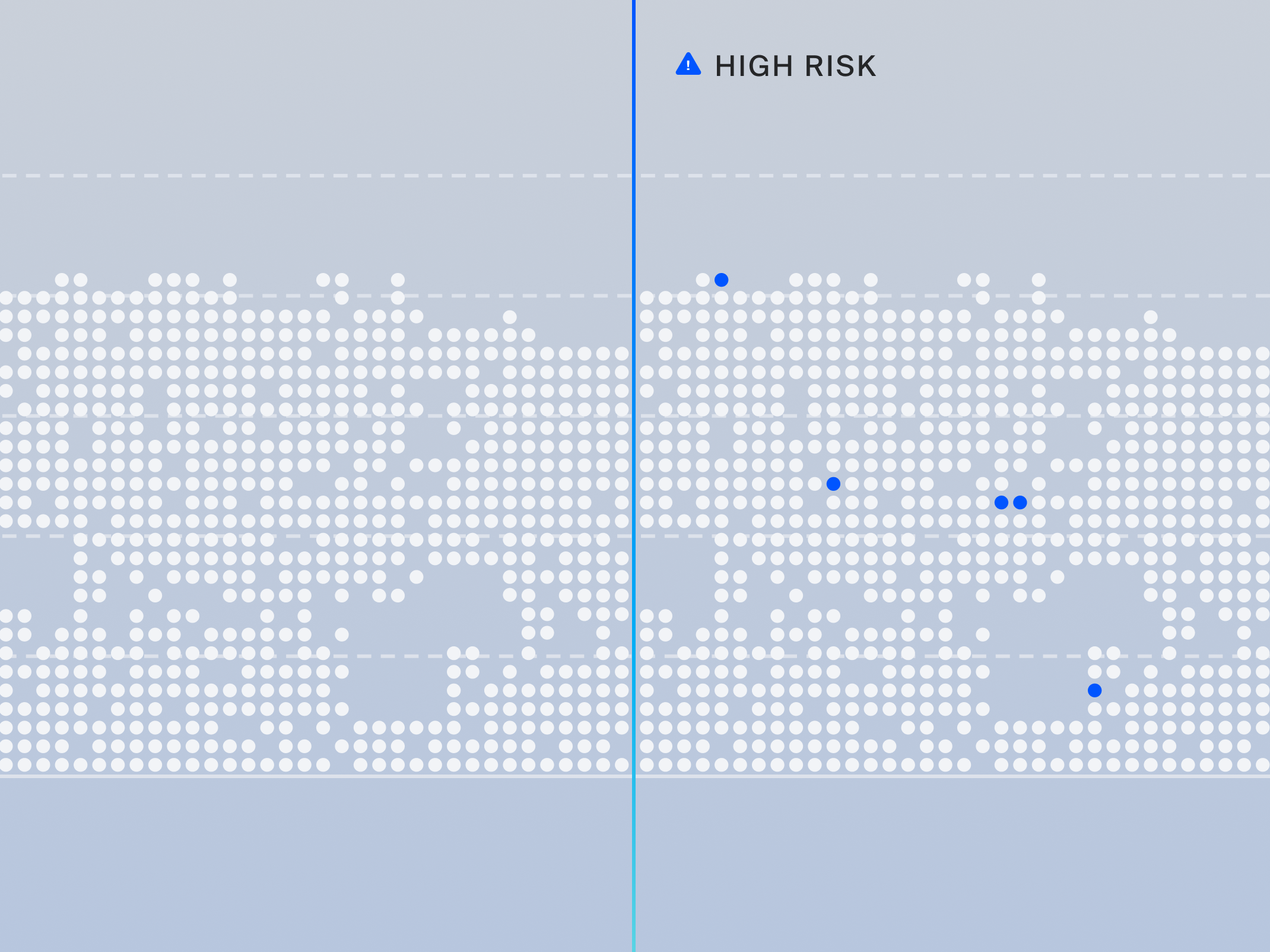
Risk assessment is only as reliable as the process knowledge it is built on. By analyzing every interaction we identify where risks originate and how they propagate through the process.
The result is a structured, traceable Risk-Based Decision-Making approach that gives your team the evidence they need.
Typical challenges include:
Data-Driven Risk Assessment
Traceable Decision-Making
Targeted Risk Control

How We Assess Risk
The Digital Process Model is analyzed to identify where risks originate and how they propagate through the process. Every hazard is evaluated based on objective data, adding a structured and reproducible layer to your existing risk management approach.
The output is structured, expert-reviewed documentation that provides your team and your regulators with clear, traceable evidence of every risk identified, evaluated, and controlled.

What You Get
Targeted risk control strategies grounded in process data give your team the confidence to make decisions that hold up under regulatory scrutiny. Every risk finding is traceable back to the underlying Digital Process Model, ensuring full transparency across your quality systems.
Because the assessment is built on a structured methodology aligned with ICH Q9 and EU GMP Annex 1, it helps your organization build the documented evidence base that supports inspection readiness.
Interested in automating quality risk management? Contact us to learn how we can assist you.
How It Works
Risk-Based Decision-Making is part of our integrated four-step process, from Digital Process Model to Effective Training and Consistent Documentation.

Digital Process Model
The Digital Process Model captures all interactions between equipment, operators, and the environment to ensure consistent and scalable modeling.

Consistent Documentation
Frame-by-Frame® automatically generates risk-based documentation directly from the Digital Process Model, keeping all information aligned, traceable, and easy to maintain.

Effective Training
Our Frame-by-Frame® method ensures effective, risk-based training for operators and technical teams.
What the industry says about us
“Through the integration of expert insights, regulatory requirements, VR technology and risk profiling data into our course content, we aim to establish a data-driven approach to training by leveraging these resources.” Read more: Press Release 19 June, 2023

“Normally, there is a certain subjectivity in training. With the Simulator the judgement on mistakes is transparent, and reproducible.”

“The virtual reality environment of the Simulator allows our operators to make mistakes, see consequences and learn from them.”

“In critical aseptic environments, employee qualification is crucial. Innerspace provides the effective training package that complements our program.”

“Since the start of our collaboration 5 years ago, Innerspace made enormous progress in establishing outstanding training tools.”

“I have integrated the VR Simulator at a customers site into an existing training program and was amazed by how easy and fast this project was going.”

“We are thrilled to partner with Innerspace to provide our members and the industry with innovative and effective training solutions that brings the VR cleanroom into any location.” Read more: Press Release 19 June, 2023

FAQ’s
Traditional risk assessments rely heavily on the experience and judgment of individual experts, which introduces subjectivity and variability. Our approach uses the Digital Process Model as an objective, data-driven foundation, ensuring that every hazard is identified and evaluated consistently and reproducibly.
You receive structured, expert-reviewed documentation that covers every identified risk, its evaluation, and the targeted control strategy defined to address it. All findings are fully traceable and formatted to support regulatory review.
The methodology is designed to meet the requirements defined in both frameworks. Risk findings are based on objective process data, scored consistently, and documented with full traceability, providing the structured evidence regulators expect.
Yes. Because the risk assessment is built on the Digital Process Model, any process change can be re-evaluated systematically. Updated findings are reflected in a revised report without starting from scratch.
Yes. Data identifies and structures the risks, but every finding is reviewed and validated by a senior Innerspace expert before delivery. This ensures that the results are both scientifically objective and practically relevant to your process.
Innerspace is Official Partner of the Parenteral Drug Association (PDA) for Designing and Delivering Data-Driven Training Solutions.
Our Frame-by-Frame®-powered programs enhance PDA’s courses, providing high-quality education even without traditional cleanroom environments.
We’d love to hear from you
Fill out the form, and one of our experts will get back to you shortly. Whether you have a question or need assistance, we’re here to help.