





Effective Training
Build and Sustain Aseptic Expertise
Frame-by-Frame® method leverages the same structured data used for risk assessment and documentation to drive your training programs.

Trusted by the industry










Effective training requires precise, data-driven focus.
By leveraging insights from the Digital Process Model, targeted, risk-based training programs are delivered for operators and technical teams.
Effective training
Risk-based training
Training of principles and process execution
Training
Methodology
Training must combine fundamental knowledge and risk awareness with role-specific, behavior-focused training to ensure compliance and operational excellence.
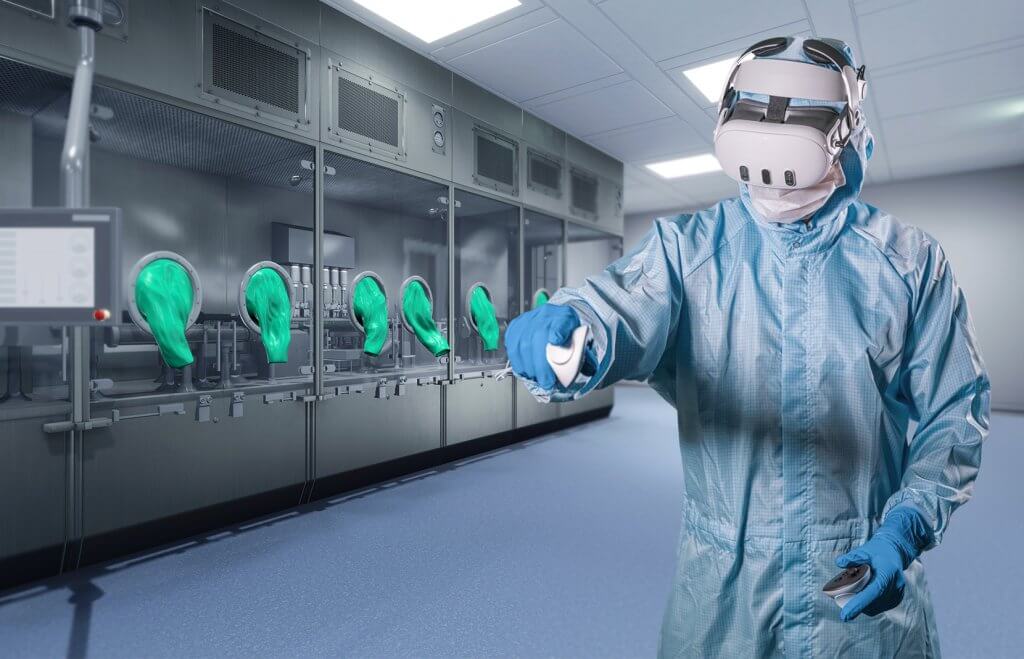
Principle-Based Training
Mastering cleanroom behavior based on aseptic principles is the focus of Innerspace’s GMP compliant Virtual Reality Cleanroom Simulator.
The content focuses on what matters most: explaining aseptic principles clearly and highlighting critical risks with real-world relevance. Trainees understand the impact of their actions and build the confidence needed to protect product quality
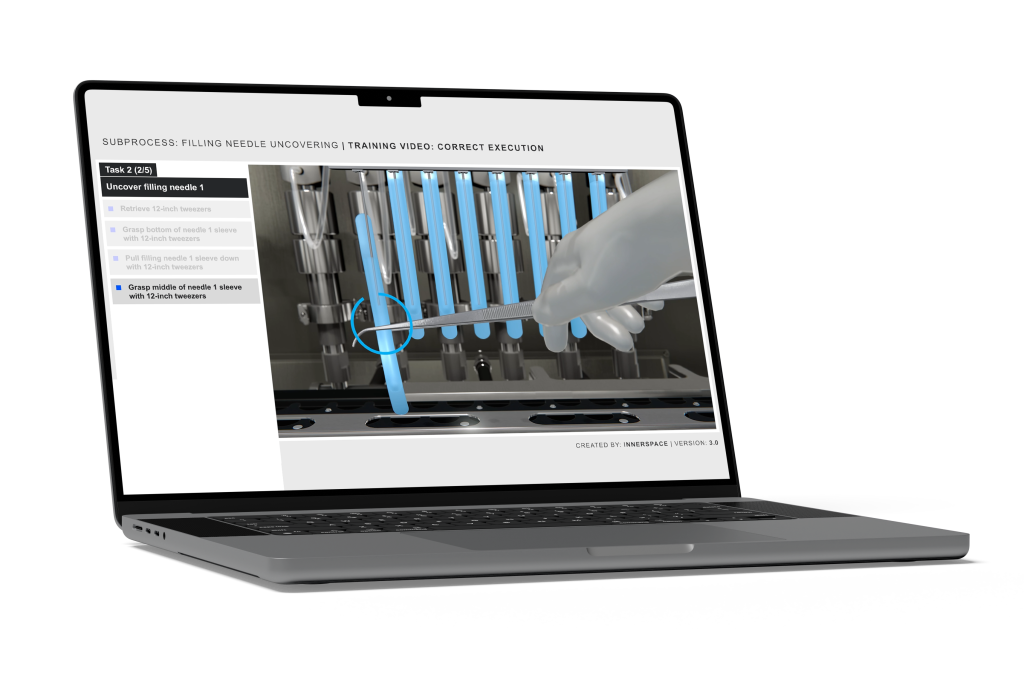
Process-Specific Training
Training based on the actual processes, procedures, equipment, and workflows of your aseptic manufacturing environment.
Training videos and documents are derived from your Digital Process Model, providing a consistent and structured way to transfer site-specific process knowledge.
Innerspace is Official Partner of the Parenteral Drug Association (PDA) for Designing and Delivering Data-Driven Training Solutions.
Frame-by-Frame®-powered programs enhance PDA’s courses, providing high-quality education even without traditional cleanroom environments.
Upcoming PDA Training Courses
Join a series of hybrid, data-driven training courses designed for professionals in the pharmaceutical industry.
2026

August 20, 2026
PDA 800.2 Fundamentals of Aseptic Processing
Denver, Colorado
October 8, 2026
PDA 800.2 Fundamentals of Aseptic Processing
Lee’s Summit, Missouri
December 3, 2026
PDA 800.2 Fundamentals of Aseptic Processing
Carlsbad, California
Interested in effective operator training? Contact us to learn how we can assist you.
How It Works
Effective Training is part of our integrated four-step process, from Digital Process Model to Risk-Based Decision-Making and Consistent Documentation.
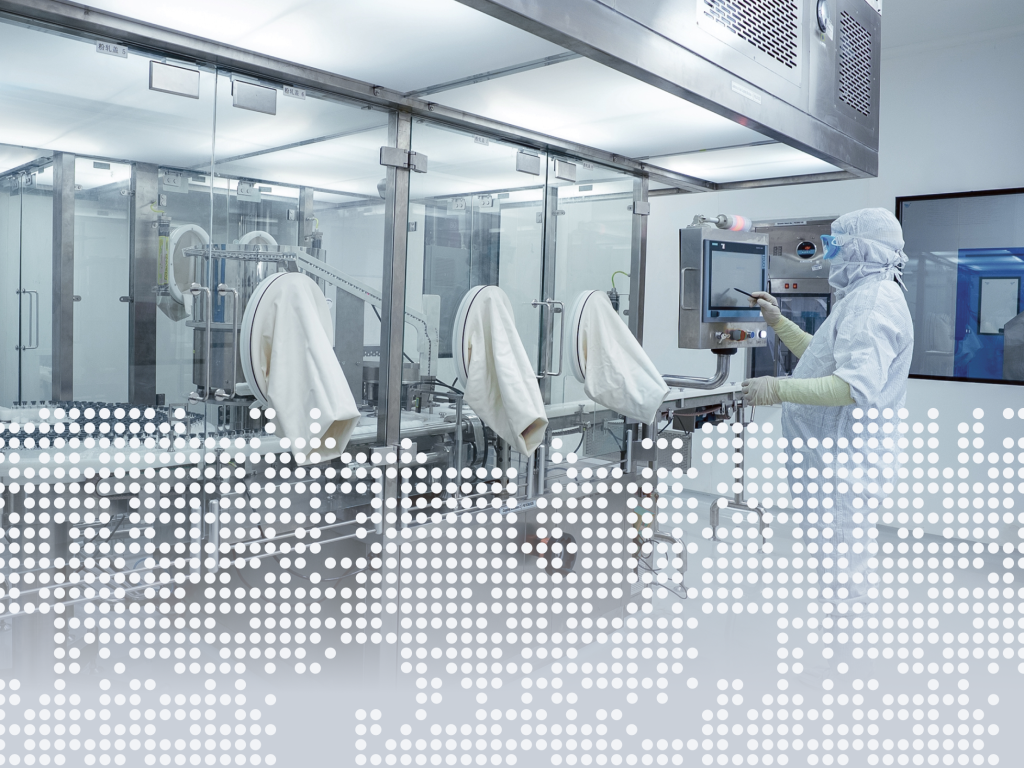
Digital Process Model
The Digital Process Model captures all interactions between equipment, operators, and the environment to ensure consistent and scalable modeling.
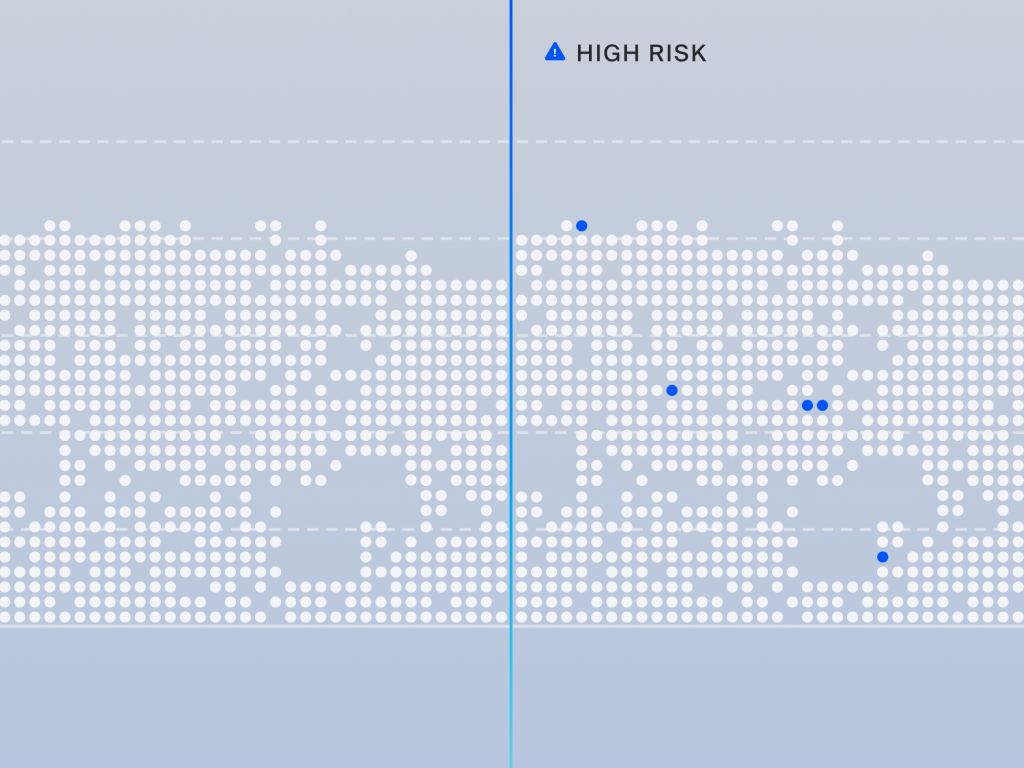
Risk-Based Decision-Making
The Digital Process Model and Frame-by-Frame® database automatically identify hazards to generate a structured risk assessment.

Consistent Documentation
Frame-by-Frame® automatically generates risk-based documentation directly from the Digital Process Model, keeping all information aligned, traceable, and easy to maintain.
What the industry says about us
“Through the integration of expert insights, regulatory requirements, VR technology and risk profiling data into our course content, we aim to establish a data-driven approach to training by leveraging these resources.” Read more: Press Release 19 June, 2023
“Normally, there is a certain subjectivity in training. With the Simulator the judgement on mistakes is transparent, and reproducible.”

“The virtual reality environment of the Simulator allows our operators to make mistakes, see consequences and learn from them.”

“In critical aseptic environments, employee qualification is crucial. Innerspace provides the effective training package that complements our program.”

“Since the start of our collaboration 5 years ago, Innerspace made enormous progress in establishing outstanding training tools.”

“I have integrated the VR Simulator at a customers site into an existing training program and was amazed by how easy and fast this project was going.”

“We are thrilled to partner with Innerspace to provide our members and the industry with innovative and effective training solutions that brings the VR cleanroom into any location.” Read more: Press Release 19 June, 2023

FAQ’s
Rather than covering superficial principles only, we design training around the specific risks and roles identified in your process. This makes the content more targeted and easier to justify during audits — without replacing the foundational GMP knowledge operators still need.
Frame-by-Frame® captures your process at the level of individual interactions between people, materials, and equipment. This gives us a structured basis for defining what needs to be trained for each role — rather than relying on assumptions or generic templates.
Yes. Because assets are built on a modular digital process model, they can be adapted for new sites or roles without starting from scratch — reducing effort significantly for follow-on projects.
We define measurable qualification criteria before training begins. After training, performance is assessed against these criteria and documented in a structured format. This provides a clear, auditable record of training effectiveness.
Annex 1 requires documented evidence that personnel are trained on the specific risks of their process. Our approach creates a direct, traceable link between the contamination control strategy, the risk assessment, and individual training records — supporting a defensible qualification process.
We’d love to hear from you
Fill out the form, and one of our experts will get back to you shortly. Whether you have a question or need assistance, we’re here to help.